What kinds of stone retaining walls do we build in Roswell?
We build three kinds: dry-stacked natural stone walls, boulder walls set by machine, and stone-faced walls, which are a structural wall with a stone veneer. Which one fits depends on the height, the slope behind it, and the look of the house and yard.
Many of Roswell's older neighborhoods have brick and stone homes, mature trees, and natural slopes. Stone fits those yards in a way block sometimes does not. Where a wall has to hold a lot of soil, we often pair the two: structure from block and grid, and stone where people see it.
Stacked stone, boulder, or stone veneer: which one fits?
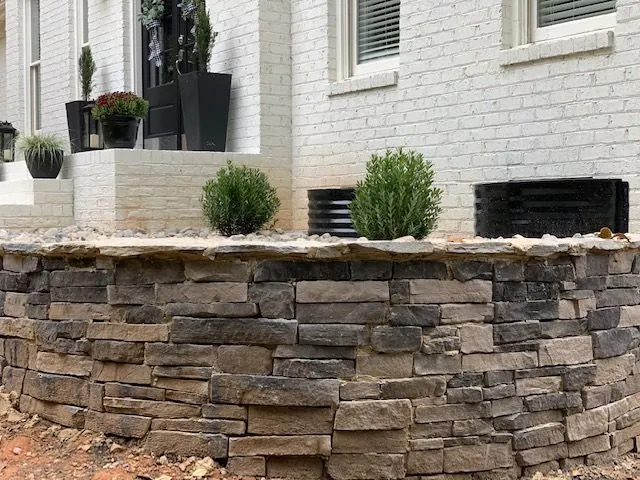
Solid stones laid dry, each course stepped back, with the longest pieces running back into the wall to tie it together. Good for garden walls, raised beds, and terraces of modest height. It looks hand built because it is.
Large stones placed by machine, the face battered back into the slope. Fast to build for the amount of soil it holds and right at home in a wooded yard. It needs more depth front to back than a block wall.
A block or concrete wall built to hold the load, with a thin natural or manufactured stone face. It is the way to get a stone look on a wall that is too tall or too loaded for dry-stacked stone.
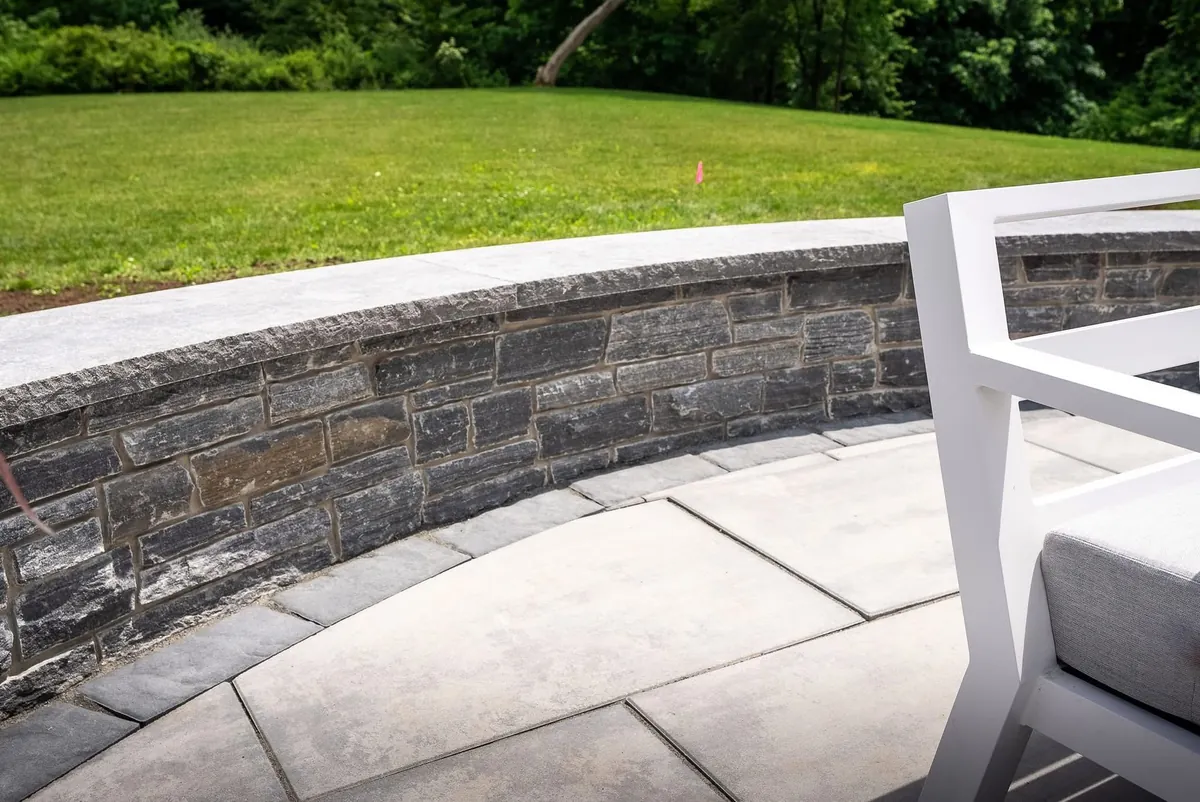
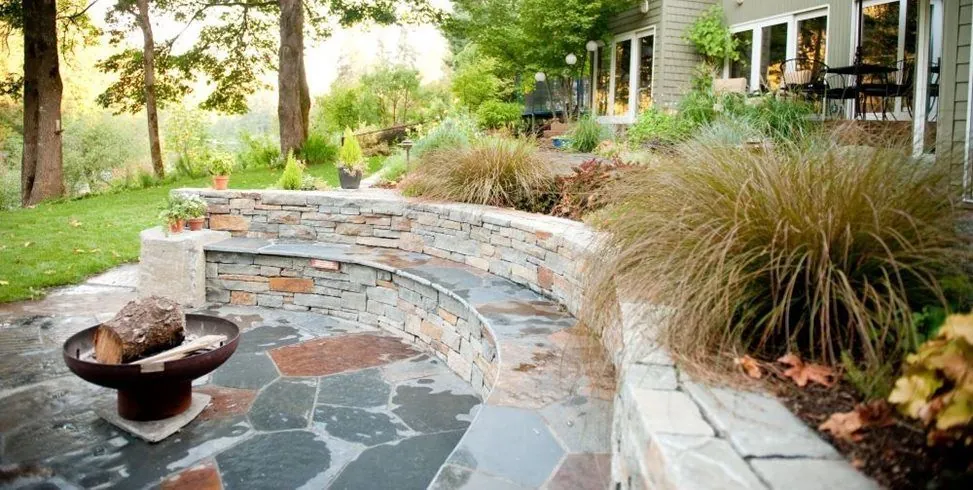
Low freestanding or retaining walls around patios and fire pits, wide enough to sit on and capped with a smooth stone. They are short, but they still need a base so they stay level.
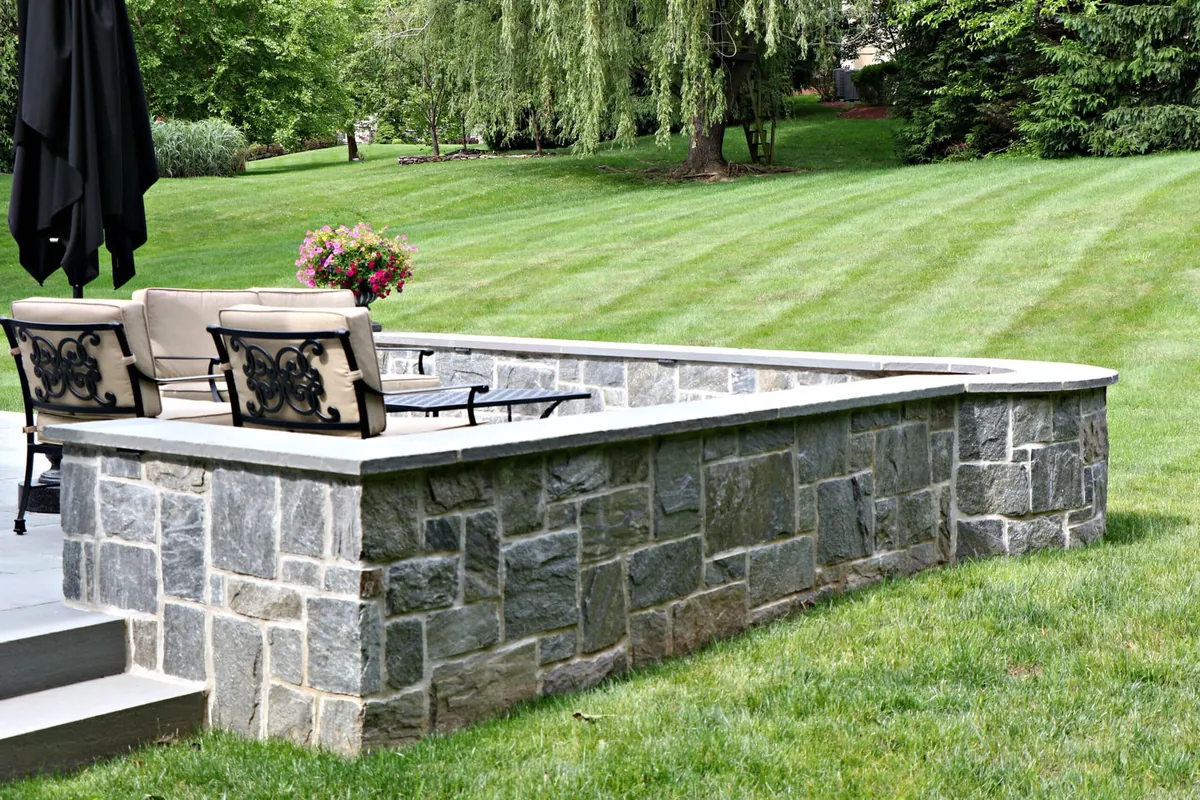
How is a dry-stacked stone wall built to last?
A stone wall is mostly what you cannot see. The face is the finishing work.
- Base below grade. A compacted crushed stone base, with the largest, flattest stones in the bottom course.
- Batter. The face leans back into the slope as it rises, so gravity works for the wall.
- Tie stones. Long stones run back into the wall at intervals so it acts as one mass, not a thin skin.
- Drainage behind. Clean stone, fabric, and a pipe to daylight, so clay does not push on the back of the wall when it rains.
- Tight joints. Each stone sits on two below it. Small chinking stones fill gaps without becoming load points.
Roswell measures walls from the bottom of the foundation to the top, and anything over 4 feet needs an engineered design. On taller stone walls that usually means a structural wall with a stone face.
Can stone walls dress up a front yard or foundation bed?
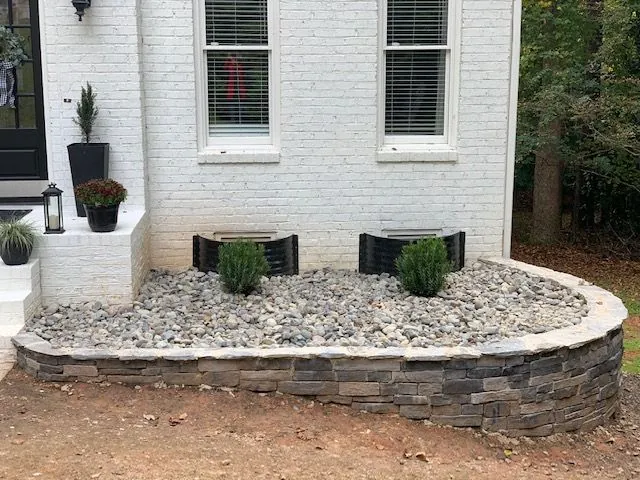
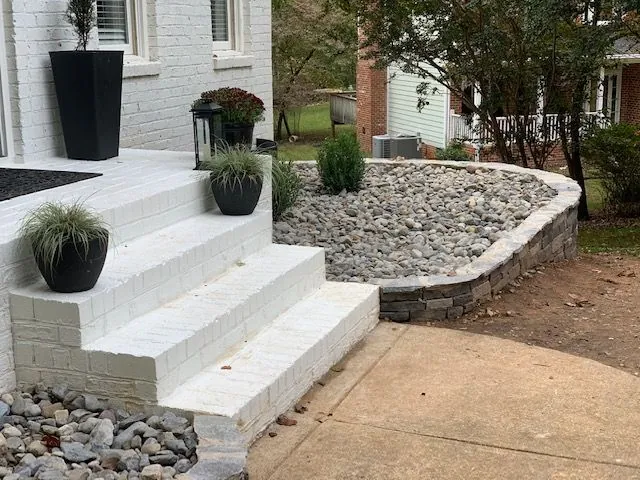
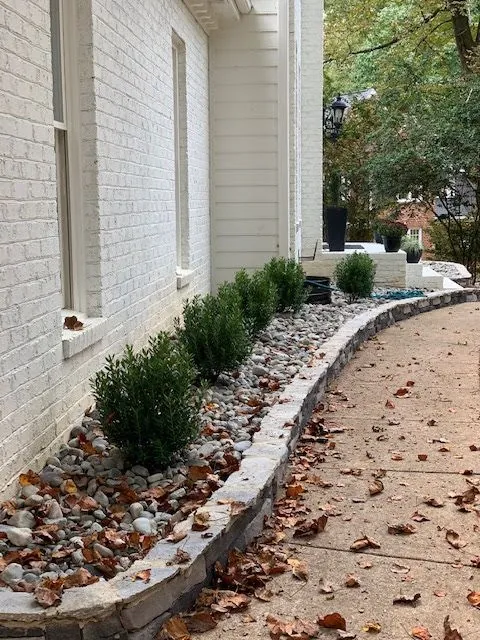
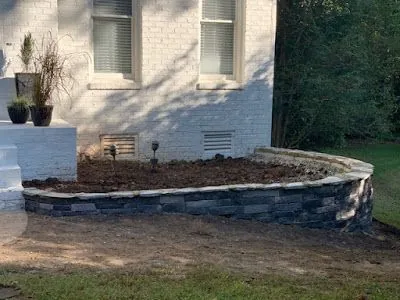
Yes, and this is some of our favorite work. Low stone walls around a front walk, a foundation bed, or a set of front steps give a house a finished look, keep mulch and rock where they belong, and hold up planting beds on a sloped front yard.
Even a 16-inch bed wall gets a base. Without one, the first wet winter heaves it out of line. We often pair these walls with river rock and a dry creek bed to carry roof water away from the foundation.
What should Roswell homeowners know before building in stone?
Stone walls fall under the same permit rules as block. Retaining walls are a permit type on the City of Roswell's combined residential building and land disturbance application, and the engineer requirement starts above 4 feet, measured from the bottom of the foundation. The permit page explains the paperwork.
If your yard backs onto a creek or sits near the Chattahoochee, buffers limit where any wall can go. The city's guide to protecting trees and streams describes 50-foot buffers and 25-foot setbacks on flowing streams and wider ones on perennial streams. We check the buffer before we draw the wall, not after.
Next door, stone is sometimes the rule rather than a choice. Sandy Springs requires retaining walls to be finished in stucco, brick or stone, and Milton asks for block seen from a public street to be faced in stucco, stone, brick or wood. A stone face over an engineered block core meets both.
How much upkeep does a stone retaining wall need?
Not much, though a little more than block. Dry-stacked stone can settle slightly in its first seasons as the pieces bed in, and a loose cap or face stone is a simple reset when it happens. Keep the drain outlet clear, keep downspouts aimed away from the top of the wall, and pull tree seedlings out of the joints while they are small, since roots can pry stones apart.
Moss and lichen on shaded, wooded lots are part of the look for many owners and do no harm to the stone. If you would rather keep the face clean, a soft brush and water are safer than a pressure washer, which can blast out joint material. Mortared stone veneer is different: cracks in its joints let water behind the face, so they are worth repointing as soon as you see them.
What are the steps to a stone wall?
See the stone
At the free estimate we look at your house and yard and bring stone samples to compare in daylight.
Pick the wall type
We match stacked, boulder, or veneer to the height and the load, and file for the permit where needed.
Dig and base
After the 811 locate, we cut the slope and build a compacted stone base.
Lay and drain
Stone goes up course by course with drainage stone and pipe behind it.
Cap and plant
Caps are set, the backfill is graded, and the beds are ready for planting.