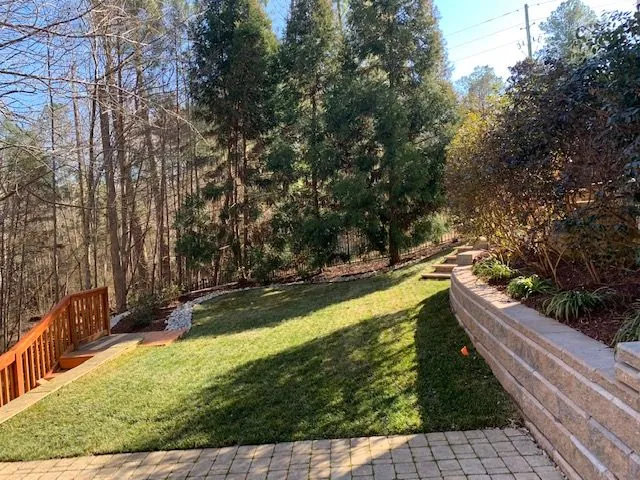
Should you replace an old crosstie wall in Roswell?
If the ties are soft, split, or bowed, or the wall leans, yes. Crosstie and timber walls rot from the inside out, and by the time you see it from the yard the wall is usually past repair. We remove the ties, haul them off, and rebuild in block or stone with drainage the old wall never had.
Railroad tie walls were a common, low-cost way to terrace a sloped lot, and you still see plenty of them on older Roswell properties. They were rarely built with drainage behind them. Add years of wet clay pushing on wood, and the result is a wall that leans, sags, and lets soil spill through the gaps.
How can you tell a tie wall is at the end?
- Soft wood. Push a screwdriver into the ties near the ground. If it sinks in easily, the wood is rotting.
- Splits and sag. Long splits, crushed ends, and ties that dip in the middle mean the wood is losing strength.
- Lean. A wall tipping toward you means the soil is winning. Tie walls rarely straighten back up.
- Gaps and spill. Soil coming through the joints after rain means there is no fabric or drainage behind it.
- Loose deadmen. The ties that run back into the hill to anchor the wall pull out or rot first.
- Bugs. Termites and carpenter ants love old ties next to a house.
Not sure? The repair page has a quick checklist that sorts a repair from a rebuild.
What should go in its place?
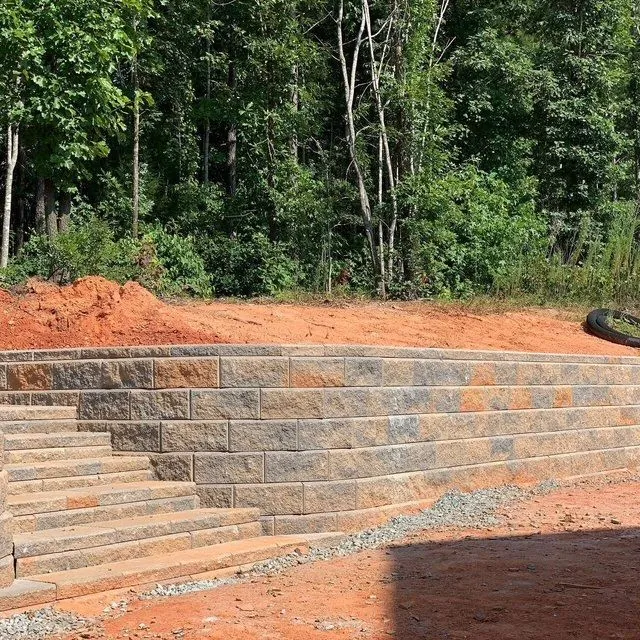
| Segmental block | The most common replacement. Lasts far longer than wood, handles clay and water well, and can curve and include steps. Block walls |
|---|---|
| Natural stone | A good choice where the old wall was part of a garden or a wooded yard and the look matters. Stone walls |
| New wood | Lowest first cost, shortest life. We do not recommend rebuilding in wood on a wall that holds real soil. |
Whatever you choose, the new wall gets what the old one lacked: a compacted base below grade, clean drainage stone behind the face, filter fabric against the clay, and a pipe that runs to daylight.
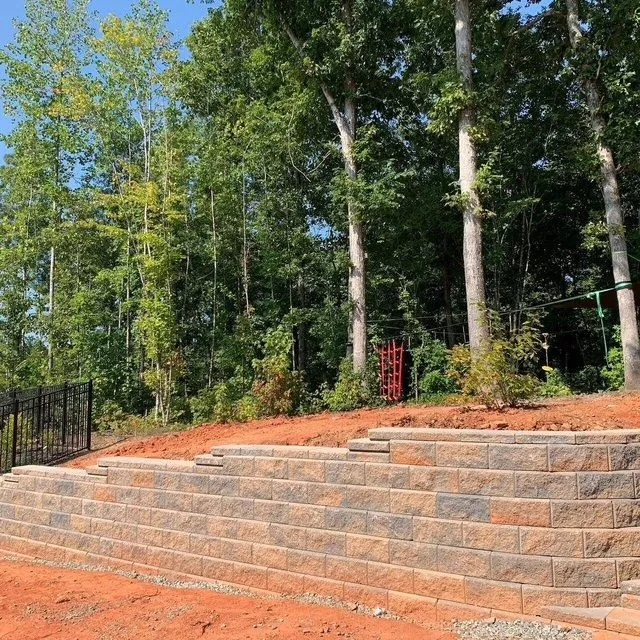
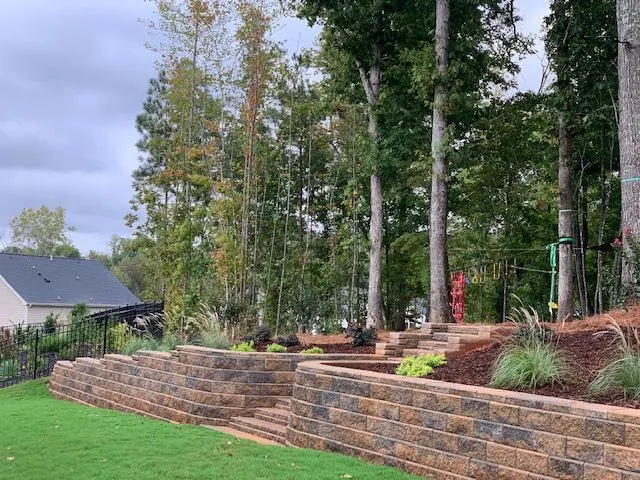
How do we take out a tie wall without wrecking the yard?
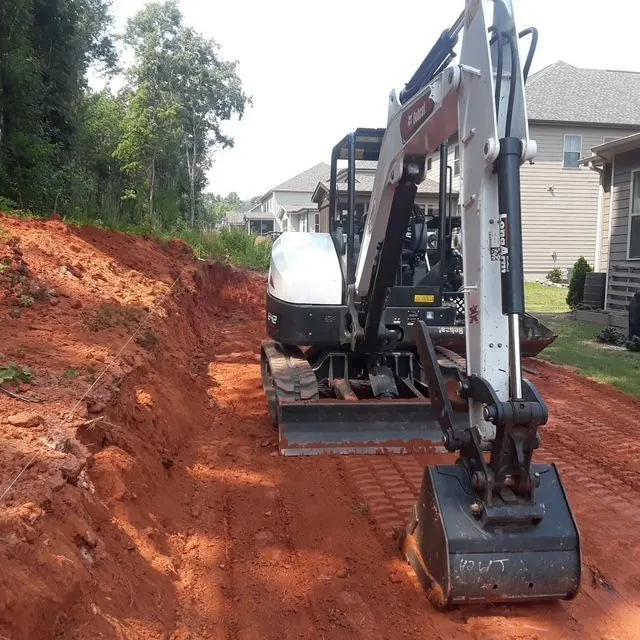
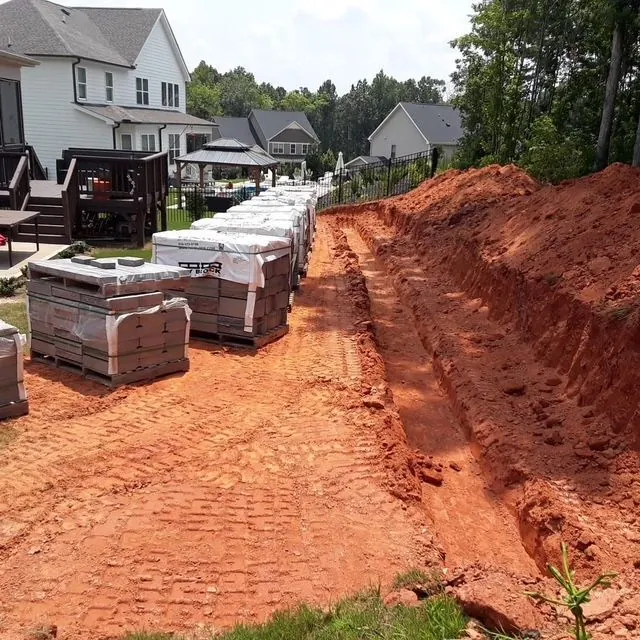
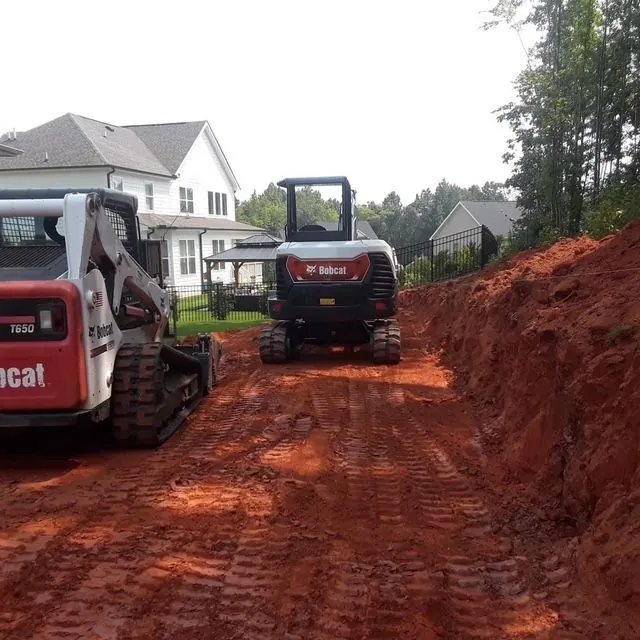
Tear-out is where a replacement job is won or lost. We plan equipment access first, often through a side yard or gate, and protect lawn and paths with mats where we can.
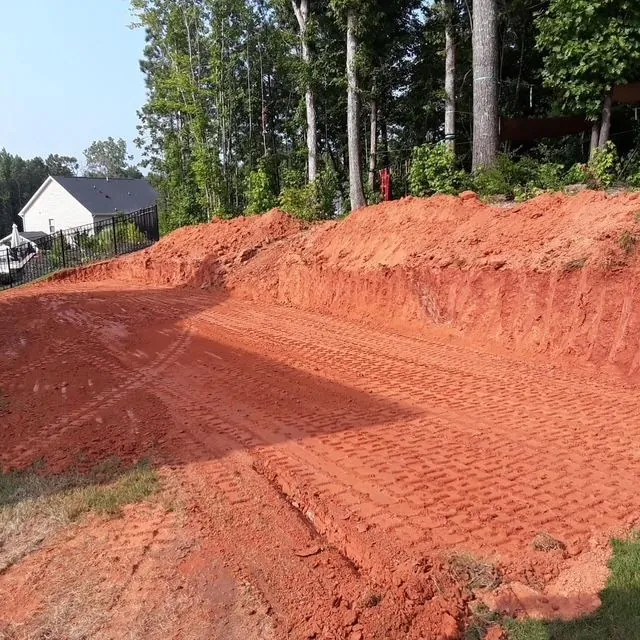
The ties come out one course at a time from the top. Spikes, rebar, and deadmen come out with them. The clay behind an old wall is usually saturated, so we cut it back to a stable face, let it dry if it needs to, and haul off what will not go back in as backfill.
Before any machine digs, we place a Georgia 811 locate request. Georgia 811 says homeowners and contractors planning mechanized digging, such as excavation or grading, should notify it.
What does Roswell require for a replacement wall?
A replacement wall is a new wall in the city's eyes. Retaining walls appear on the City of Roswell's combined residential building and land disturbance application. Walls over 4 feet, measured from the bottom of the foundation to the top of the wall, must be designed by a qualified engineer, with the engineer's wall design certification and an owner indemnification form filed with the application.
A long tie wall often hides more grade change than it looks like, because part of it is buried. We measure it the way the city does before we price. The permit page has a section tool for that.
Can the new wall go where the old tie wall stood?
Usually close to it, but rarely on exactly the same line. A block or stone wall is thicker than a row of ties, and it needs room behind the face for drainage stone and, on taller walls, geogrid that runs back into the slope. That room comes from cutting the hill back or setting the new face slightly forward, and we show you which one your yard allows before the estimate is final.
A tall tie wall is also a chance to rethink the grade. Two shorter terraced walls with a planting bed between them can stand in for one tall wall, though walls set close together can behave like one taller wall, so the spacing gets settled in the design. Whether terracing makes sense depends on how much flat yard you are willing to give up at the top or the bottom. The cost guide compares the two approaches.
What are the steps in a crosstie replacement?
Look and measure
At the free estimate we check the ties, the lean, the buried height, and the access route.
Choose and file
You pick block or stone. We bring in an engineer if the wall is over 4 feet and file the permit.
Locate, tear out, haul
After the 811 locate, the old wall comes out and the ties leave the property.
Base, wall, drainage
New base, courses, drainage stone, fabric, pipe, and geogrid where designed.
Grade and clean
Backfill is compacted, the top graded to drain, and the yard cleaned up.