Retaining walls in Roswell, GA · Est. 2019
Retaining wall contractor in Roswell, GA
Retaining wall contractor for Roswell homes: block walls, natural stone walls, steps, and drainage built for the city's hills and red clay, plus repair and replacement when an old wall starts to lean. Every job starts with a free estimate on site.
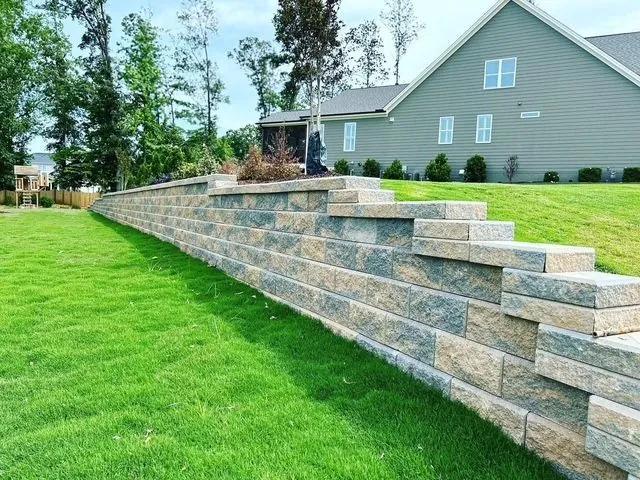
Which wall job do you have?
A retaining wall contractor builds walls that hold soil back where the ground changes level, and fixes or replaces the ones that are failing. In Roswell that mostly means cutting into sloped clay yards, setting a compacted base, building the wall in block or stone, and giving water a way out from behind it.
Each job below has its own page, because a crosstie replacement, a new stone wall, and a set of steps are priced and built differently.
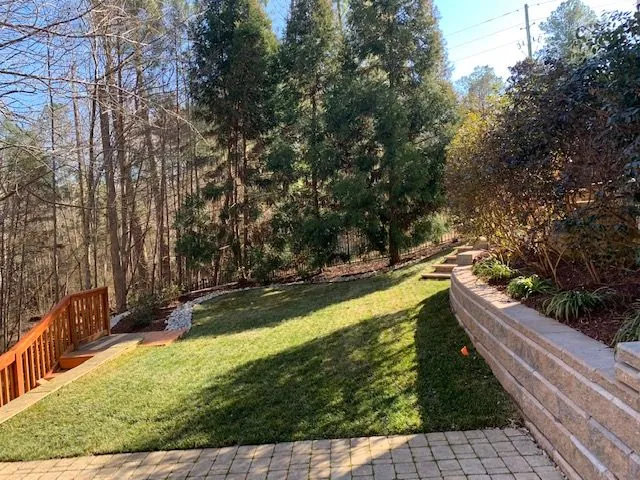 Retaining wall repairLeaning, bulging or washing walls diagnosed and fixed, or the failed section rebuilt.
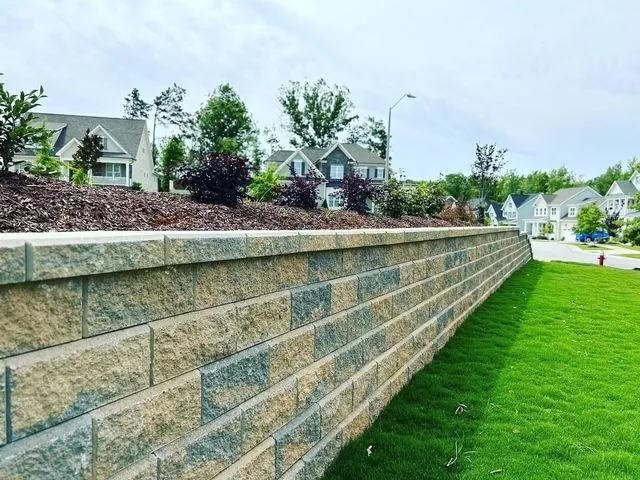 Block retaining wallsSegmental concrete block walls, from low garden walls to engineered terraces.
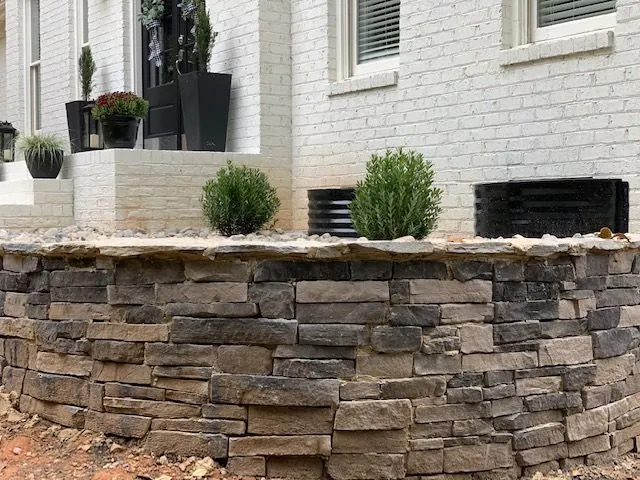 Natural stone wallsStacked stone, boulder and stone-faced walls that fit older Roswell homes.
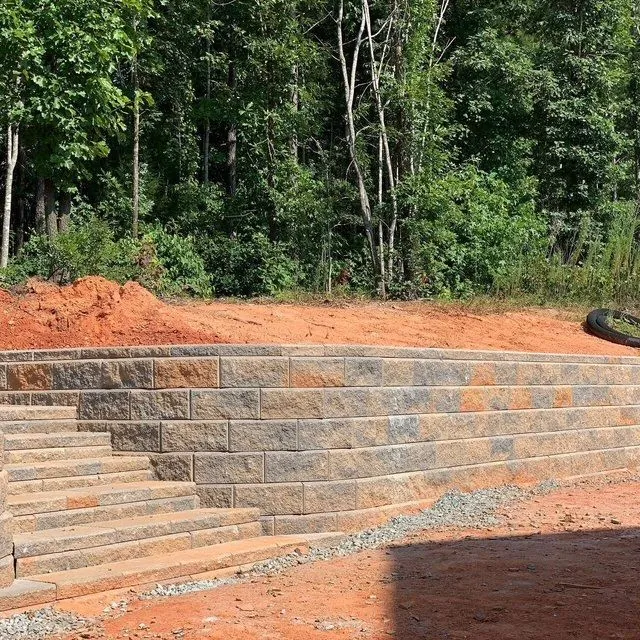 Crosstie wall replacementRotted railroad tie and timber walls removed, hauled off and rebuilt.
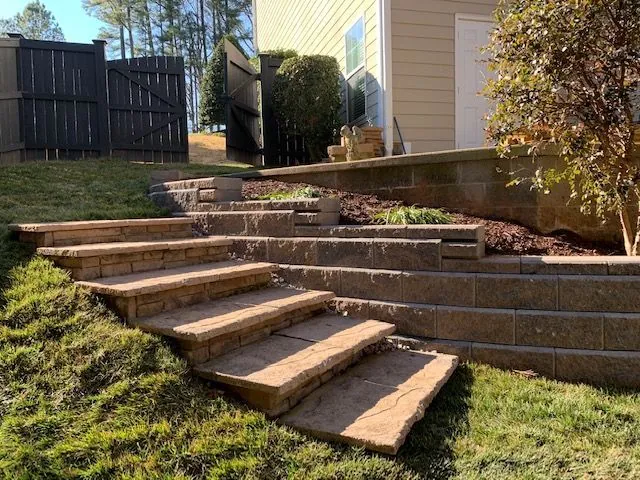 Walls with stepsSteps built into the wall so a sloped yard is usable again.
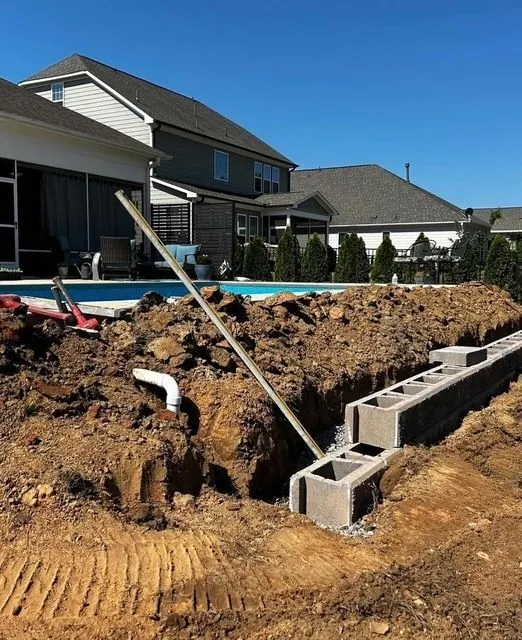 Wall drainageDrainage stone, fabric, pipe and outlets behind new and existing walls.
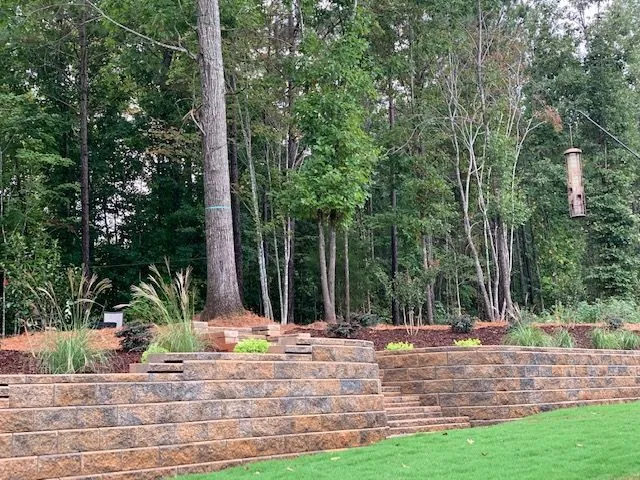
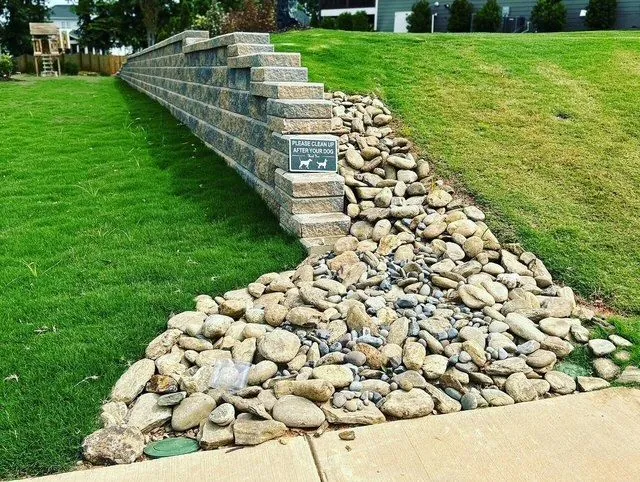
What do finished walls around Roswell look like?
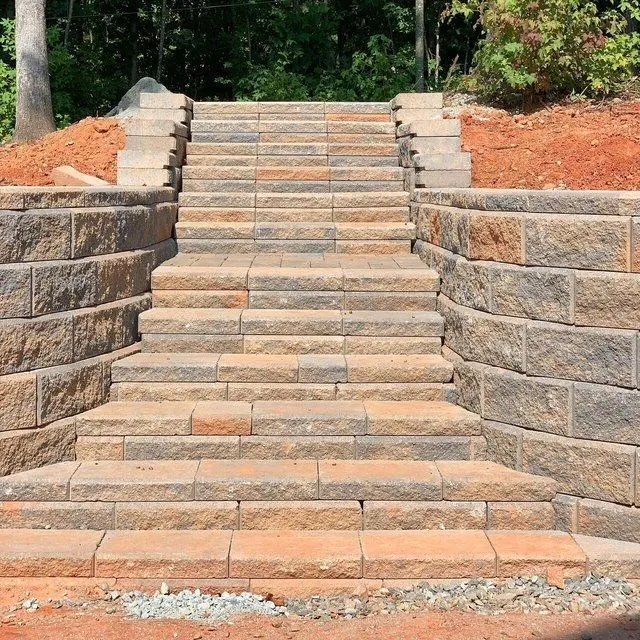
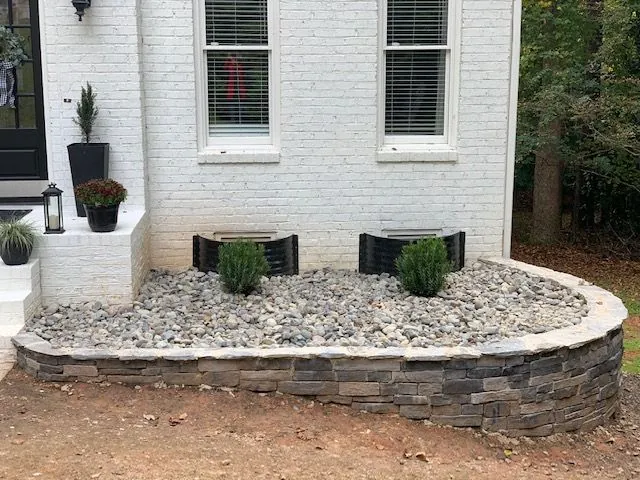
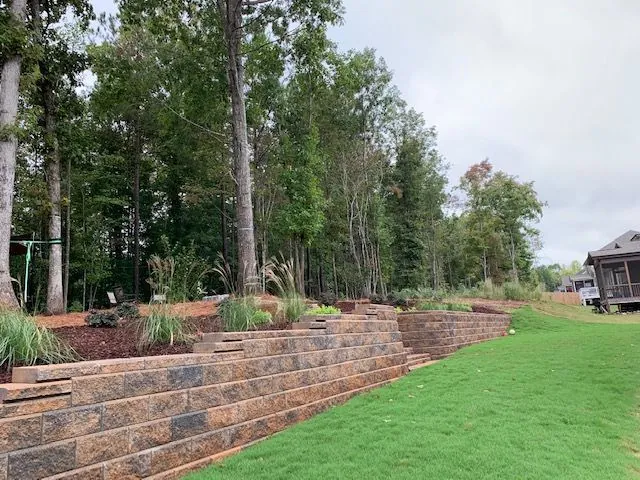
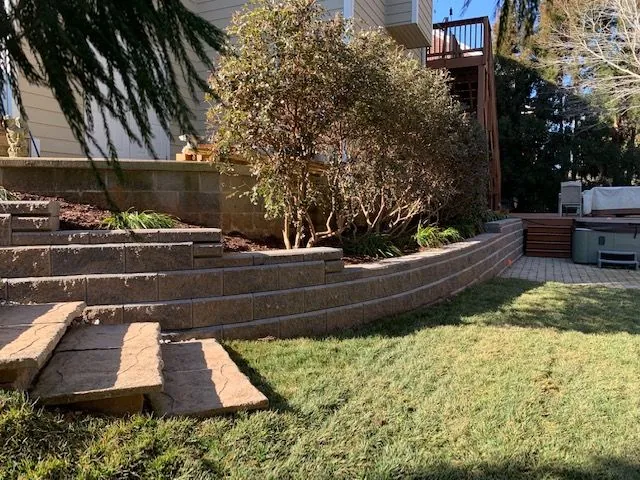
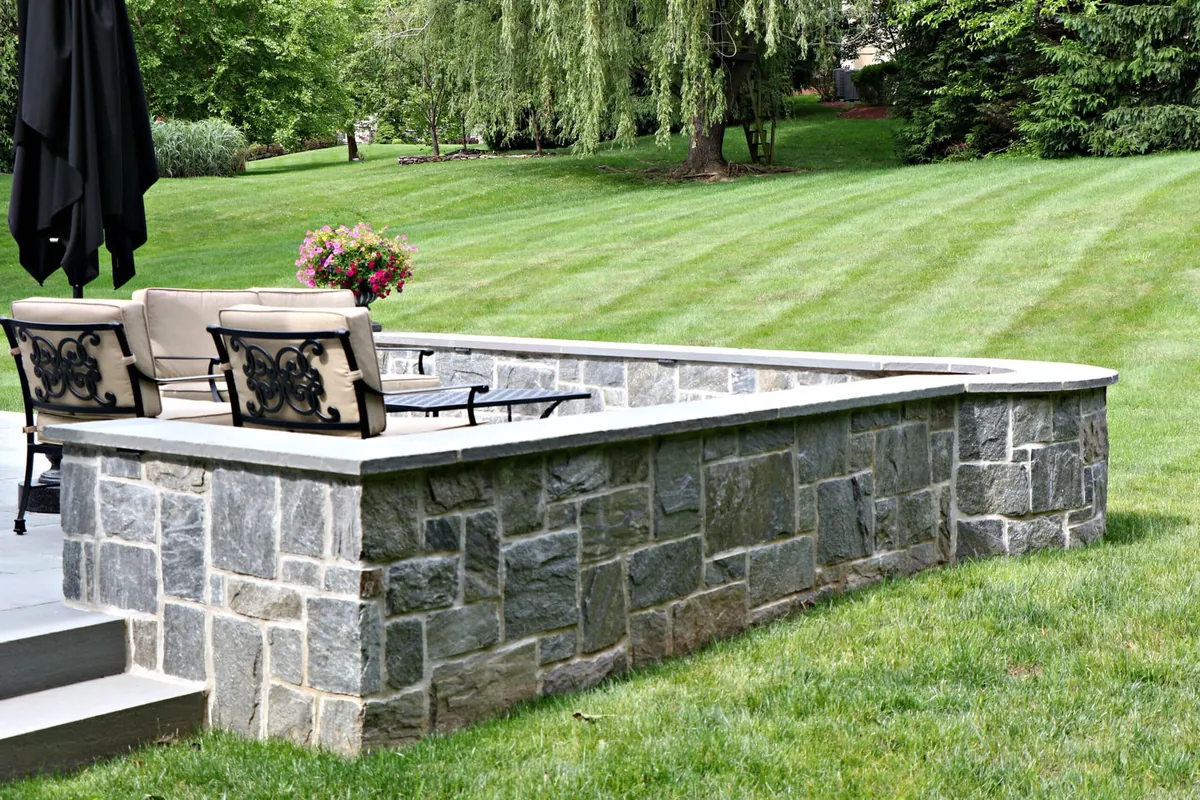
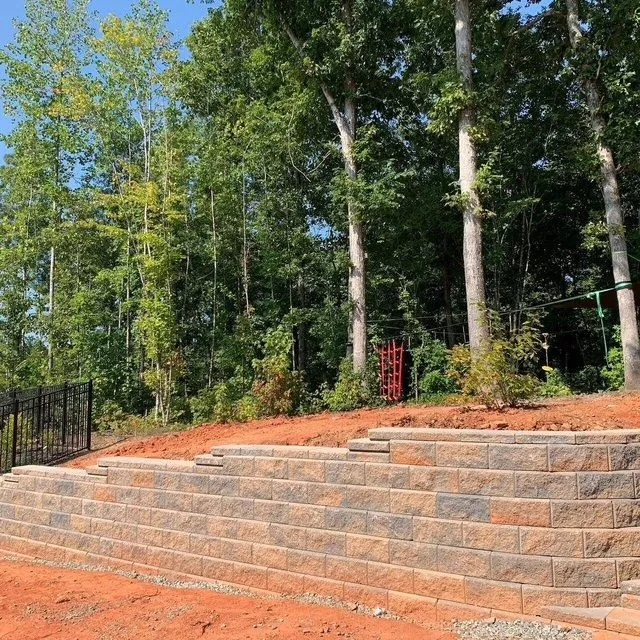
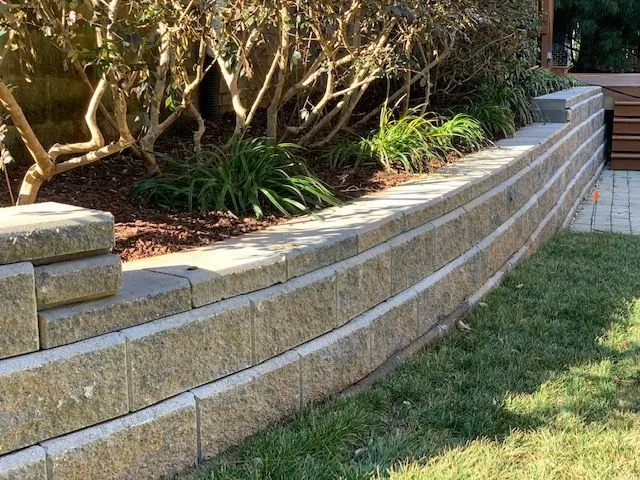
Is your Roswell wall over the 4-foot engineer line?
Roswell's residential permit checklist (city PDF) requires an engineered design for any wall more than 4 feet tall, measured from the bottom of the foundation to the top of the wall. Below that, the city's Code Enforcement Guide still requires a building permit application for any wall over 30 inches.
The buried course counts. A wall that shows 3 feet 8 inches above the lawn can cross the line once the part below grade is added.
The Roswell retaining wall permit page has a section tool that draws your wall and reads it against the rules for Roswell, Sandy Springs, Alpharetta, Johns Creek and Cobb County, plus the offices and stream buffer limits.
What makes Roswell hard ground for a retaining wall?
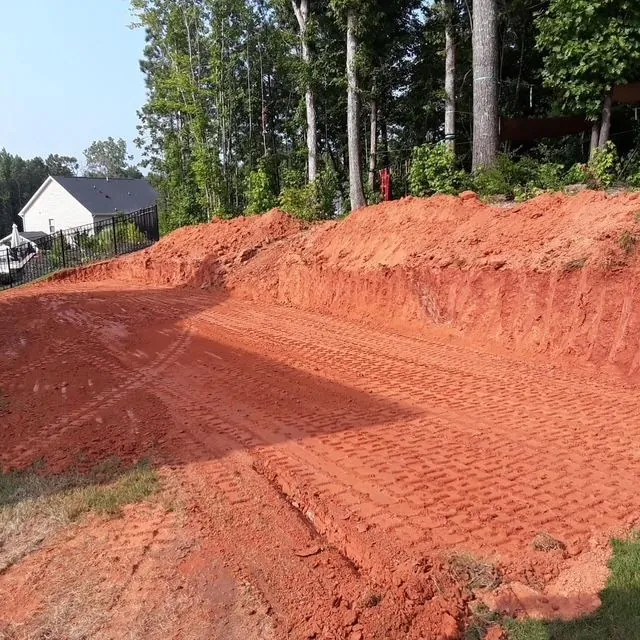
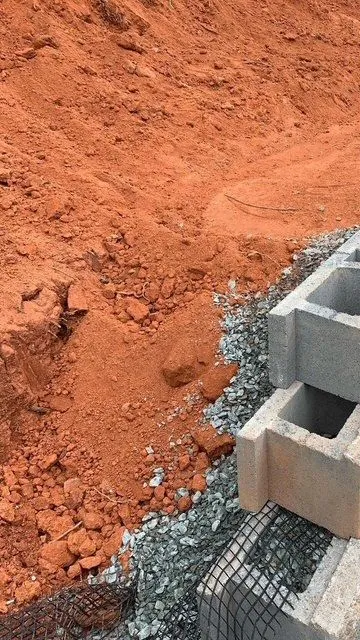
Most walls fail because of water, not weight. Roswell sits in Georgia's Piedmont on red clay that holds water, so a wall without drainage stone and an outlet ends up holding back wet, heavy soil that it was never built for.
The New Georgia Encyclopedia explains that the red color comes from iron oxides left behind as the rock weathers, and calls that weathered mixture saprolite. It also notes that clearing and farming led to heavy erosion of the Piedmont uplands, with a foot or more of topsoil lost over decades. On many lots, what you dig into today is that subsoil.
Roswell is hilly, too. The Chattahoochee River runs along the Brevard Fault Zone, which the National Park Service describes as the boundary between the Appalachian Mountains and the Piedmont. Yards on that kind of ground step down in terraces, and the terraces need walls.
Where in Roswell do walls matter most?
Almost everywhere the ground drops toward water. Explore Georgia notes that Roswell stretches nine miles along the Chattahoochee. Land that falls toward the river and its creeks is where walls work hardest, and where buffer rules decide how close a wall can get.
Historic Roswell
Explore Georgia describes a 640-acre historic district downtown, with Canton Street as its main street. On an older downtown lot we check with the city before we draw a wall.
Vickery Creek
Roswell King built a cotton mill on Vickery Creek in the 1830s, and the creek was dammed to power the mills. Lots near the creek fall under Roswell's stream buffers, so a wall there starts with a buffer check.
Along the Chattahoochee
Roswell's river corridor runs 2,000 feet from each bank under the city's guide, with limits on clearing and building. Walls there start with a buffer check. Corridor rules
Big Creek
The city's Big Creek stream highlight describes Big Creek as a tributary to the Chattahoochee River basin. Roswell's transportation plan maps the Big Creek Greenway near Azalea Park. Yards that drain toward the creek get a buffer check before any wall is drawn.
Holcomb Bridge Road
Holcomb Bridge Road (SR 140) crosses GA-400 in Roswell. The city's Big Creek Parkway fact sheet calls that interchange congested for trips between east and west Roswell. Plan equipment access and delivery times for lots along the corridor.
Beyond Roswell
Alpharetta, Johns Creek, Milton, Sandy Springs and East Cobb, each with its own permit office.
What should you check before you call?
Five minutes in the yard makes the free estimate faster and the number more accurate. None of this is required, but it helps.
- Measure the wall. Length, and height at the tallest point from the lawn in front. A tape and a phone photo are plenty.
- Photograph the problem. Lean, bulge, wet spots, soil at the toe. Same spot, same angle, dated if you can.
- Look above it. Is there a driveway, pool, deck, or the house within a few feet of the top?
- Find the water. Where do downspouts discharge? Is there a creek or ditch at the bottom of the yard?
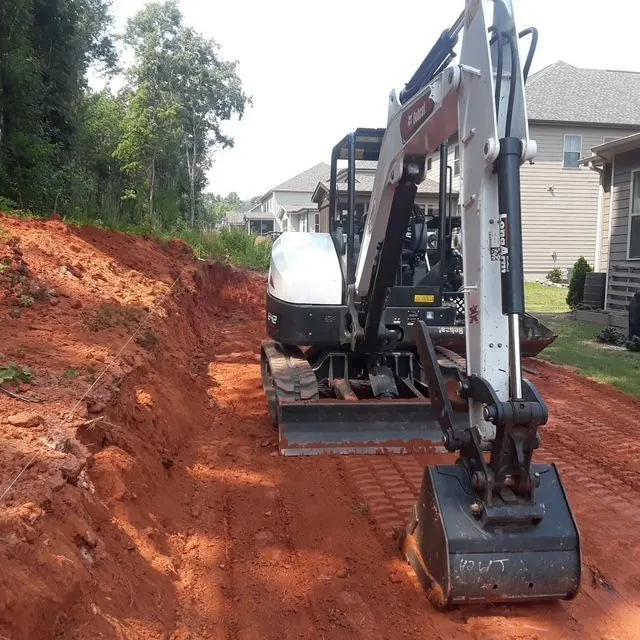
- Check access. Gate width and whether a small machine can reach the wall from the street.
- Check your HOA. Some neighborhoods review walls and materials before work starts.
Which areas around Roswell do we cover?
The City of Roswell first, then nearby Alpharetta, Johns Creek, Milton, Sandy Springs and East Cobb. The permit office goes by the parcel, so we check yours before we price the wall. Not sure? Send the address.
Roswell
Building permit over 30 inches; engineer above 4 feet.
Sandy Springs
Stone, brick or stucco faces; sealed design at 6 feet.
Alpharetta
Site wall permit over 4 feet, or under a driveway.
Milton
Street-side block faced in stone, brick, stucco or wood.
East Cobb
Cobb County permits walls from 30 inches.
Johns Creek
Permit at 48 inches; 50-foot creek and pond buffer.
What happens between the free estimate and the finished wall?
Free estimate on site
We walk the slope with you, look at where water goes, measure, and talk through block, stone, and steps.
Design and permit
For walls over 4 feet we bring in an engineer. We prepare what the city asks for and file it.
Locate and dig
We request a Georgia 811 locate before any machine digs, then cut the slope and set the base.
Build and drain
Courses go up with drainage stone, fabric, and pipe behind them, and geogrid where the design calls for it.
Backfill and clean up
We compact the backfill, finish the grade, haul off debris, and walk the finished wall with you.
What do Roswell homeowners ask about walls?
Do I need a permit for a retaining wall in Roswell?
How do I pick a retaining wall contractor in Roswell?
Can you fix my leaning wall, or does it have to come down?
What kind of wall lasts longest on Roswell clay?
How long does a retaining wall take to build?
Do you replace old railroad tie walls?
Visits by appointment only. Phone first or use the form, and we will agree on a time to meet at the wall.
Send us the wall details
Give us the address and a rough idea of the wall. Someone from the crew phones you back to pick a time to measure it, and the free estimate costs nothing.